The Shift Toward Automation in Procurement
- Sandie Tirado

- Feb 27
- 2 min read
Procurement has long been an area where manual processes, spreadsheets, and outdated systems dominated operations. But as businesses scale and supply chains become increasingly complex, the need for automation has never been more evident.

Today, AI, ERP systems, and automation tools are transforming procurement efficiency, reducing human error, and allowing teams to focus on strategic decision-making rather than tedious administrative work.
How AI Enhances Procurement Efficiency
Artificial intelligence is revolutionizing procurement by providing predictive analytics, supplier risk assessment, and process automation. AI-driven systems can:
Analyze historical data to optimize purchasing decisions.
Identify supplier risks before they become disruptive.
Automate invoice processing and compliance checks.
Enhance contract management by flagging potential cost-saving opportunities.
By leveraging AI, procurement teams can move beyond reactive decision-making and embrace a more proactive approach that optimizes vendor relationships and cost management.
The Role of ERP Systems in Procurement Automation
Enterprise Resource Planning (ERP) systems have become the backbone of procurement automation, integrating various processes into a centralized platform. Key benefits of ERP in procurement include:
Streamlined Procurement Workflows: Eliminating silos between departments ensures a smooth transition from purchase requisition to payment.
Real-Time Spend Visibility: Businesses can monitor expenses in real-time, ensuring budgets align with corporate objectives.
Improved Compliance: Automated tracking of approvals, contracts, and regulatory requirements reduces the risk of non-compliance.
Better Supplier Collaboration: ERP systems provide vendor portals that facilitate smoother communication and order management.
By automating procurement through ERP, companies gain better control over their supply chain while minimizing inefficiencies.
Automation Tools That Are Reshaping Procurement
Beyond AI and ERP, specific automation tools are making procurement teams more agile and data-driven. These tools help with:
E-Procurement Platforms: Allowing users to automate vendor selection, purchase orders, and invoice reconciliation.
Robotic Process Automation (RPA): Handling repetitive tasks such as data entry, approval workflows, and supplier onboarding.
Spend Analytics Software: Identifying cost-saving opportunities and improving procurement strategies.
Contract Lifecycle Management (CLM) Software: Automating contract approvals, renewals, and compliance tracking.
Automation tools significantly reduce manual workloads, improve accuracy, and enhance procurement efficiency, allowing professionals to shift their focus to value-added activities.
Real-World Impact: Reducing Manual Workload with Automation
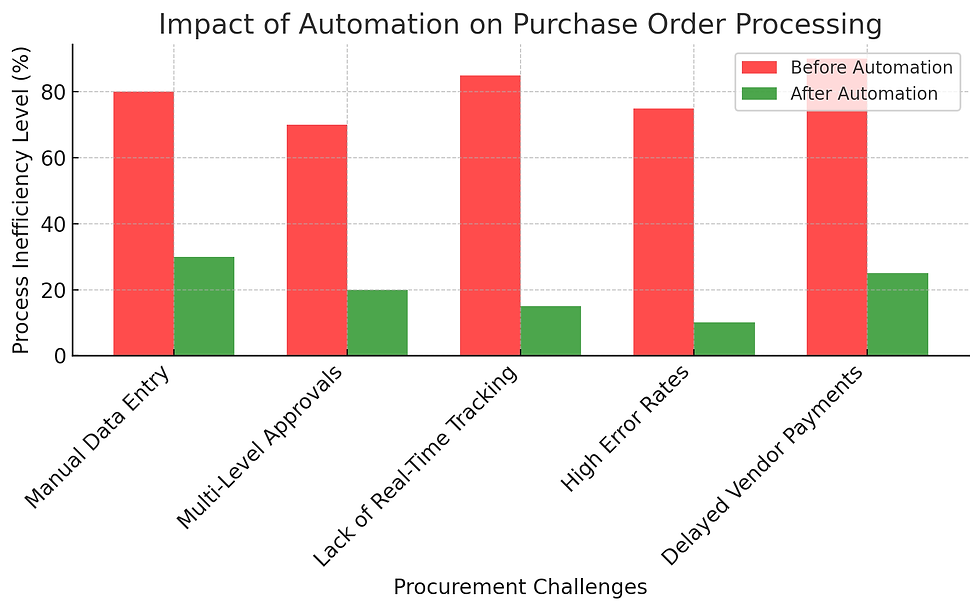
In my experience, leveraging automation in procurement has had a tangible impact on operational efficiency. By implementing AI-driven procurement analytics, ERP integrations, and automated approval workflows, I’ve seen firsthand how teams can:
Cut down manual invoice processing times by over 30%.
Reduce procurement cycle times from weeks to days.
Minimize data discrepancies and improve compliance tracking.
Enhance spend visibility for better budget control and forecasting.
The Future of Procurement: A Fully Automated Ecosystem
Looking ahead, automation in procurement will only continue to evolve. AI-driven chatbots will handle supplier inquiries, blockchain technology will improve transparency in transactions, and predictive analytics will further optimize sourcing strategies. The goal is to build a fully automated ecosystem where procurement functions seamlessly with minimal manual intervention.
Conclusion
Procurement automation is not just a trend—it’s a necessity for businesses aiming to stay competitive in an increasingly digital world. By embracing AI, ERP systems, and automation tools, procurement teams can unlock efficiency, reduce costs, and drive strategic value for their organizations. The shift toward automation is inevitable, and those who adapt will be well-positioned for success in the future of vendor and spend management.


Comments